





Breast cancer is one of the most commonly diagnosed cancers among women worldwide, including India. With advancements in cancer treatment, several effective treatment options are now available to manage breast cancer and improve patient outcomes. One of the most important treatment methods is Radiation Therapy, also known as Radiotherapy.
Radiation therapy uses high-energy radiation to destroy cancer cells or prevent them from growing and dividing. It is commonly recommended after breast cancer surgery to reduce the chances of cancer returning in the breast or surrounding lymph node regions.
Dr. Mahesh Pawar at Care Speciality Hospital, Pune, emphasizes the importance of understanding different breast cancer treatment options, early diagnosis, and personalized cancer care. Radiation therapy plays an important role in a multidisciplinary breast cancer treatment plan, depending on the patient’s cancer stage, surgical procedure, pathology report, and overall health.
For women looking for information about breast cancer radiation treatment in Pune, Maharashtra, understanding the procedure, benefits, techniques, possible side effects, and recovery process can help them make informed decisions about their treatment.
What Is Radiation Therapy for Breast Cancer?
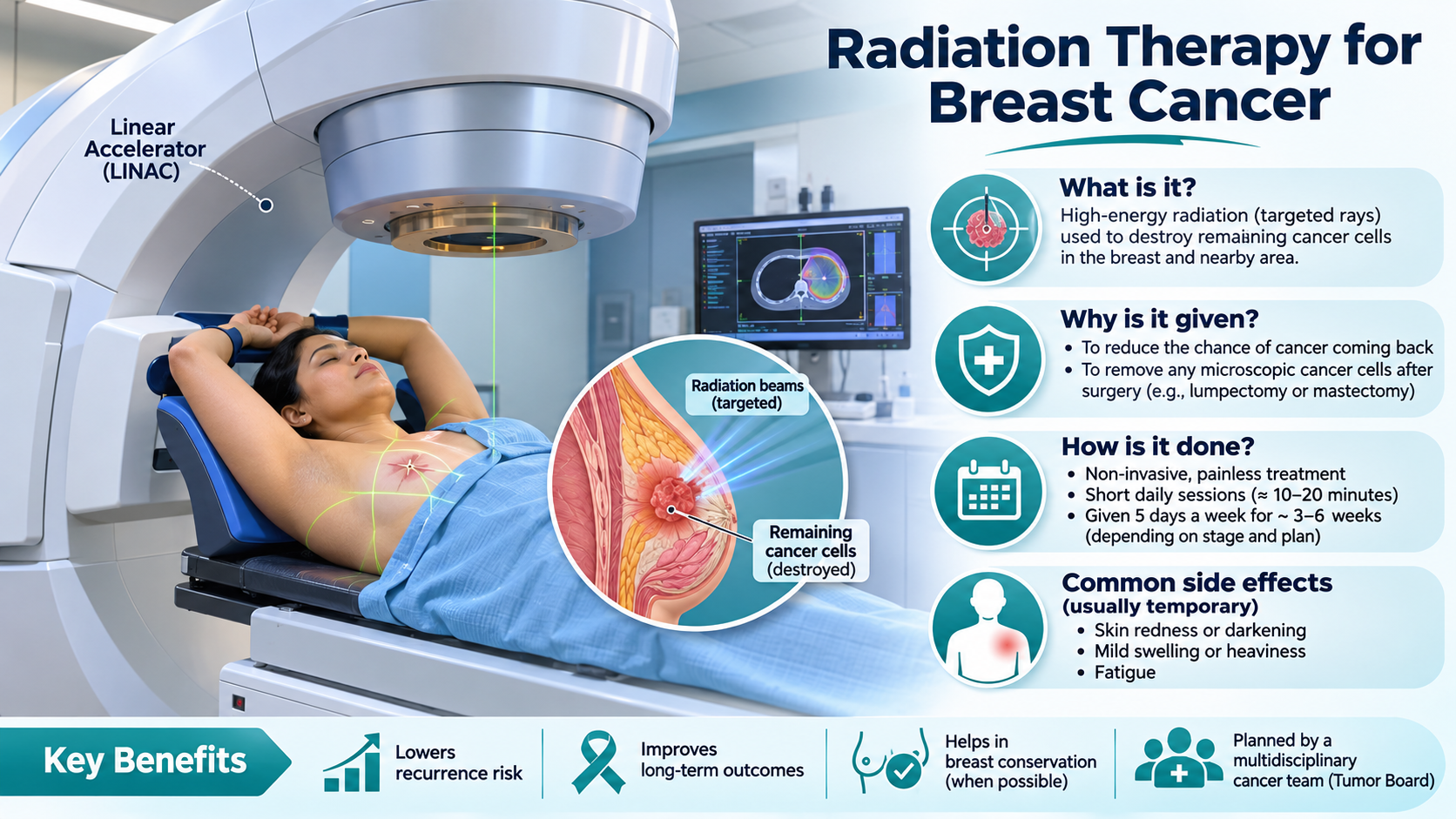
Radiation therapy is a cancer treatment that uses high-energy X-rays or other forms of radiation to destroy cancer cells or stop them from multiplying.
In breast cancer treatment, radiation is generally directed towards the affected breast, chest wall, or nearby lymph node regions, depending on the patient’s medical condition.
Radiation damages the DNA inside cancer cells. When cancer cells cannot repair this damage, they stop dividing and eventually die.
Radiation therapy is usually given in carefully planned sessions over several days or weeks. The exact number of sessions depends on the cancer stage, treatment technique, surgical history, and individual treatment requirements.
The primary goals of radiation therapy for breast cancer are:
-
Destroying any remaining cancer cells after surgery.
-
Reducing the risk of breast cancer recurrence.
-
Treating cancer cells in nearby lymph node regions when necessary.
-
Improving local and regional cancer control.
-
Relieving symptoms in selected patients with advanced breast cancer.
At Care Speciality Hospital, Pune, Dr. Mahesh Pawar emphasizes individualized treatment planning based on the patient’s diagnosis and medical reports.
Why Is Radiation Therapy Important in Breast Cancer Treatment?
Radiation therapy is an important part of breast cancer management because surgery may remove the visible tumor, but microscopic cancer cells can sometimes remain in the surrounding breast tissue or nearby lymph node regions.
Radiation therapy helps destroy these remaining microscopic cancer cells and reduces the risk of cancer returning in the treated area.
It is particularly important for patients undergoing breast-conserving surgery, where the breast is preserved rather than completely removed.
Depending on the patient’s condition, radiation therapy may also be recommended after mastectomy.
The decision to recommend radiation therapy depends on several factors, including:
-
Tumor size.
-
Breast cancer stage.
-
Lymph node involvement.
-
Surgical margins.
-
Tumor grade and biological characteristics.
-
Presence of cancer cells near the chest wall or surrounding tissues.
-
Response to chemotherapy before surgery.
-
Overall health and other medical conditions.
Not every breast cancer patient requires the same radiation treatment. The treatment plan should be determined after evaluating the complete medical and pathological findings.
When Is Radiation Therapy Recommended for Breast Cancer?
Radiation therapy may be recommended at different stages of breast cancer treatment.
1. After Breast-Conserving Surgery
Breast-conserving surgery, also known as lumpectomy, removes the cancerous tumor while preserving most of the breast.
Radiation therapy is generally recommended after breast-conserving surgery to reduce the risk of cancer returning in the remaining breast tissue.
Even when the surgeon successfully removes the visible tumor, microscopic cancer cells may remain in the surrounding tissue.
Radiation treatment helps target these cells and improves local cancer control.
2. After Mastectomy
Mastectomy involves the surgical removal of the entire breast.
However, removing the breast does not always eliminate the need for radiation therapy.
Post-mastectomy radiation therapy may be recommended for patients with higher-risk disease, including certain patients with lymph node involvement, large tumors, or other unfavorable pathological findings.
The decision depends on the patient’s cancer stage, lymph node status, surgical margins, and response to previous treatment.
3. When Breast Cancer Has Spread to Lymph Nodes
Breast cancer can spread to nearby lymph nodes, particularly those located in the underarm region.
If cancer cells are detected in the lymph nodes, radiation therapy may be recommended to treat the affected or high-risk lymph node regions.
These areas may include:
-
Axillary lymph nodes (underarm).
-
Supraclavicular lymph nodes (above the collarbone).
-
Internal mammary lymph nodes (near the breastbone).
Treating the appropriate lymph node regions can help improve regional cancer control.
4. For Locally Advanced Breast Cancer
In locally advanced breast cancer, the tumor may be large or may have spread into surrounding tissues or lymph node regions.
Treatment may involve a combination of chemotherapy, surgery, radiation therapy, hormone therapy, or targeted therapy, depending on the tumor characteristics.
Radiation therapy is often an important component of treatment for locally advanced breast cancer.
5. For Advanced or Metastatic Breast Cancer
When breast cancer spreads to distant organs such as bones, brain, or other parts of the body, radiation therapy may be used to control specific symptoms.
For example, radiation may help relieve:
-
Bone pain caused by cancer spread.
-
Painful or growing tumors.
-
Symptoms caused by brain metastases.
-
Pressure on nerves or other important structures.
In these situations, radiation therapy may be used as palliative treatment to improve comfort and quality of life.
-
What Are the Different Types of Radiation Therapy for Breast Cancer?
Different radiation techniques are available for treating breast cancer. The choice depends on the tumor location, cancer stage, previous surgery, and treatment goals.
1. External Beam Radiation Therapy (EBRT)
External Beam Radiation Therapy is the most commonly used radiation treatment for breast cancer.
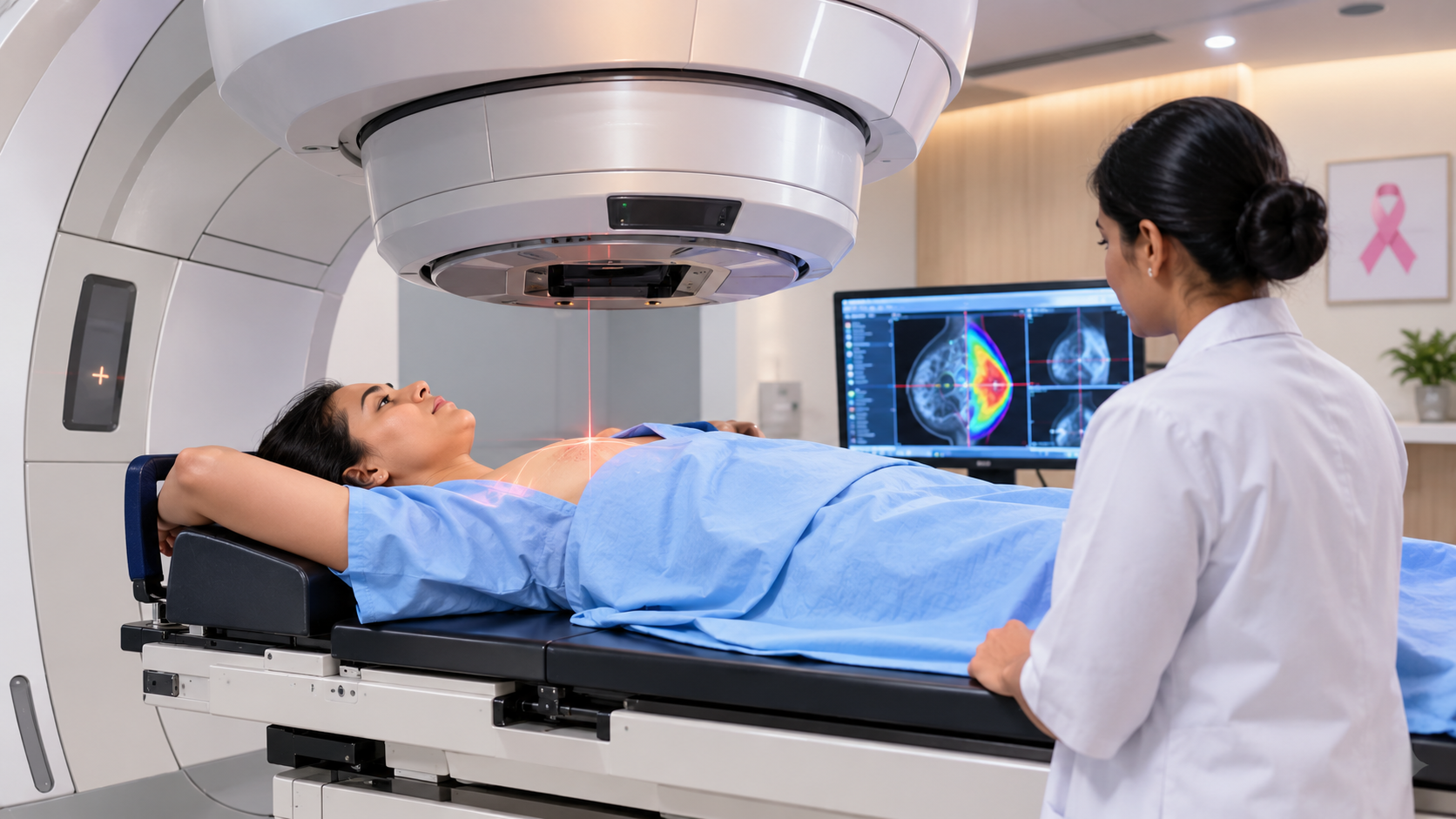
In this method, a specialized machine called a Linear Accelerator (LINAC) delivers high-energy radiation beams to the affected area.
The radiation machine remains outside the patient’s body and directs carefully planned radiation towards the breast, chest wall, or lymph node regions.
The treatment is usually delivered as an outpatient procedure.
External beam radiation therapy may include:
-
Whole Breast Radiation Therapy.
-
Partial Breast Irradiation.
-
Chest Wall Radiation Therapy.
-
Regional Lymph Node Radiation Therapy.
2. Whole Breast Radiation Therapy
Whole breast radiation therapy involves delivering radiation to the entire affected breast.
It is commonly recommended after breast-conserving surgery.
The objective is to destroy microscopic cancer cells that may remain in the breast tissue after the tumor has been surgically removed.
In selected patients, an additional radiation dose called a boost may be delivered to the tumor bed, which is the area where the original tumor was located.
3. Partial Breast Irradiation
Partial breast irradiation targets only the specific area of the breast where the tumor was removed rather than treating the entire breast.
It may be suitable for selected patients with favorable cancer characteristics.
Partial breast irradiation can reduce the volume of normal breast tissue exposed to radiation.
However, it is not appropriate for every patient. Age, tumor size, lymph node status, surgical margins, and other pathological factors are considered before recommending this approach.
4. Post-Mastectomy Radiation Therapy (PMRT)
Post-mastectomy radiation therapy is given after the surgical removal of the entire breast.
It may target the chest wall and selected nearby lymph node regions.
PMRT is recommended for patients who have a significant risk of local or regional cancer recurrence after mastectomy.
The decision is based on tumor size, lymph node involvement, surgical margins, cancer stage, and response to neoadjuvant treatment.
5. Brachytherapy
Brachytherapy is a form of internal radiation therapy in which a radiation source is temporarily placed inside or near the area where the tumor was located.
It delivers radiation directly to the selected treatment area.
In breast cancer, brachytherapy may be considered for selected patients as a method of partial breast irradiation.
Its suitability depends on the patient’s cancer characteristics and available treatment facilities.
What Is IMRT in Breast Cancer Treatment?
Intensity-Modulated Radiation Therapy (IMRT) is an advanced radiation technique that allows doctors to control the intensity of radiation beams according to the treatment area’s shape and location.
IMRT uses carefully planned radiation beams to deliver the prescribed dose to the target area while reducing unnecessary radiation exposure to nearby healthy tissues.
This technique may be considered when the treatment area is close to important organs such as the heart and lungs or when conventional radiation planning cannot achieve the desired dose distribution.
The selection of IMRT depends on the patient’s anatomy and treatment planning requirements.
What Is 3D Conformal Radiation Therapy?
Three-Dimensional Conformal Radiation Therapy (3D-CRT) is a radiation technique that uses three-dimensional imaging to shape radiation beams according to the target area.
The main objective is to deliver radiation accurately to the affected region while minimizing exposure to surrounding healthy tissues.
The radiation treatment plan is developed using imaging studies and computerized planning systems.
This technique may be used in selected breast cancer treatment cases.
What Is Deep Inspiration Breath Hold (DIBH) in Breast Cancer Radiation?
Deep Inspiration Breath Hold, commonly called DIBH, is a specialized breathing technique used during radiation therapy, particularly for selected patients with left-sided breast cancer.
During deep inspiration, the lungs expand and the heart moves farther away from the chest wall.
This technique can help reduce the amount of radiation reaching the heart during left-sided breast cancer treatment.
The patient is instructed to take a deep breath and hold it for a short period while the radiation machine delivers treatment.
DIBH may be recommended depending on the patient’s anatomy, treatment area, and radiation planning results.
-
How Is Radiation Therapy Given for Breast Cancer?
Many patients feel anxious when they first hear that they need radiation therapy. However, understanding the treatment process can help reduce fear and uncertainty.
Radiation therapy is generally delivered through a series of planned sessions.
Step 1: Initial Consultation
The radiation oncology team reviews the patient’s medical history, biopsy report, surgical records, imaging studies, and other relevant investigations.
The doctor determines whether radiation therapy is required and discusses the treatment objectives.
Step 2: CT Simulation
CT simulation is performed to plan the radiation treatment accurately.
During this procedure:
-
The patient is positioned on a specialized treatment couch.
-
The required treatment position is identified.
-
CT images are obtained.
-
The treatment area is marked or digitally identified.
-
Special positioning devices may be used to maintain accuracy.
CT simulation helps the radiation oncology team plan the treatment according to the patient’s individual anatomy.
Step 3: Radiation Treatment Planning
After CT simulation, the radiation oncology team prepares a detailed treatment plan.
The radiation oncologist identifies the target area and nearby organs that need protection.
The medical physics team helps calculate the appropriate radiation dose and beam arrangement.
Step 4: Daily Radiation Sessions
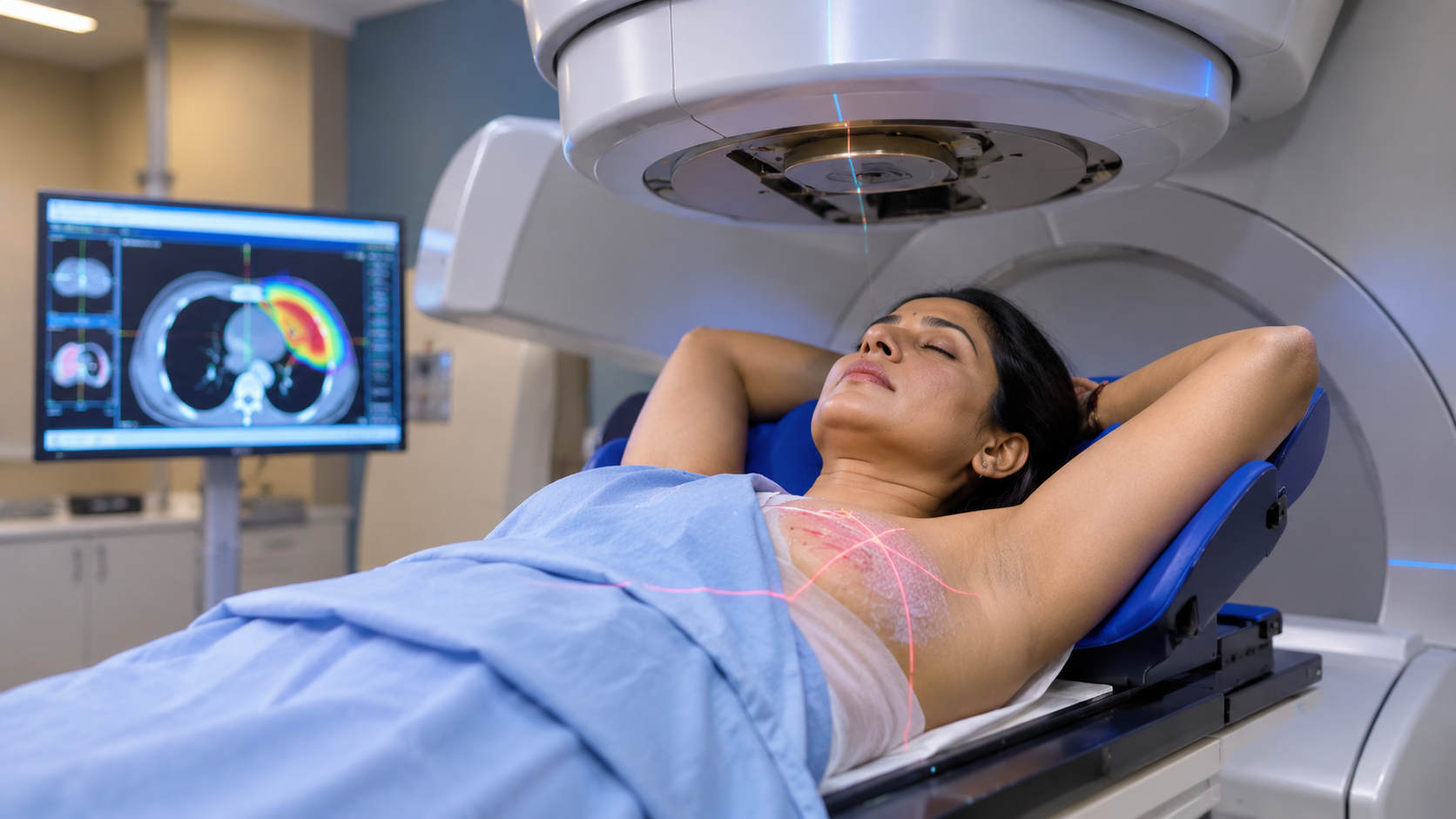
During treatment, the patient lies on the treatment couch in the planned position.
The radiation machine moves around the patient and delivers radiation to the selected area.
The actual radiation delivery usually takes only a few minutes, although the complete appointment may take longer because of positioning and setup.
Radiation treatment is generally painless.
Step 5: Regular Monitoring
Patients are monitored throughout the treatment course.
The healthcare team checks for skin reactions, fatigue, discomfort, and other possible side effects.
Any concerns should be discussed with the treating medical team.
Step 6: Follow-Up After Treatment
After completing radiation therapy, patients receive follow-up care according to their treatment plan.
Follow-up visits help doctors assess recovery, monitor side effects, and evaluate long-term treatment outcomes.
How Many Radiation Therapy Sessions Are Needed for Breast Cancer?
The number of radiation therapy sessions varies from patient to patient.
It depends on:
-
Type of breast cancer surgery.
-
Cancer stage.
-
Tumor characteristics.
-
Whether lymph nodes require treatment.
-
Radiation technique.
-
Previous chemotherapy or other treatment.
-
Individual treatment goals.
Some patients may receive radiation therapy over approximately one week, while others may require treatment over several weeks.
Modern breast cancer radiation schedules often use hypofractionation, which delivers a higher dose per session over fewer treatment sessions in appropriately selected patients.
For example, whole breast radiation may commonly be delivered over approximately three to four weeks, although shorter or longer schedules may be appropriate in selected circumstances.
Patients should follow the exact schedule recommended by their radiation oncologist.
What Are the Side Effects of Radiation Therapy for Breast Cancer?
Radiation therapy is an important treatment for breast cancer, but it can also affect some nearby healthy tissues.
Most side effects depend on the radiation dose, treatment area, individual sensitivity, and overall health of the patient.
Not every patient experiences the same side effects.
1. Skin Redness and Irritation
One of the most common side effects is a change in the skin over the treated area.
Patients may experience:
-
Redness.
-
Dryness.
-
Itching.
-
Skin darkening.
-
Peeling.
-
Mild tenderness.
These changes may resemble a mild sunburn and generally improve gradually after treatment.
2. Fatigue
Some patients experience tiredness during or after radiation therapy.
Fatigue may develop gradually as treatment progresses.
Taking adequate rest, maintaining hydration, eating nutritious food, and performing light physical activity as advised can help manage fatigue.
3. Breast Swelling and Tenderness
The treated breast may become slightly swollen, sensitive, or uncomfortable.
Some patients may also experience temporary changes in breast texture.
These symptoms generally improve over time, although some changes may persist.
4. Breast Hardening or Changes in Shape
Radiation may cause changes in the breast tissue, including firmness, fibrosis, or changes in breast size and appearance.
The extent of these changes varies among patients.
5. Lymphedema
Lymphedema refers to swelling caused by the accumulation of lymphatic fluid.
It may develop when breast cancer surgery and radiation therapy affect the lymphatic drainage system, particularly when underarm lymph node regions are treated.
Symptoms may include:
-
Swelling in the arm.
-
A feeling of heaviness.
-
Tightness around the arm or shoulder.
-
Reduced movement.
-
Discomfort in the affected area.
Early medical assessment and appropriate rehabilitation can help manage lymphedema.
6. Heart and Lung Effects
Radiation treatment for breast cancer may expose nearby organs such as the heart and lungs to some radiation.
Modern radiation planning techniques help reduce unnecessary exposure to these organs.
Deep Inspiration Breath Hold and other treatment-planning techniques may be used to protect the heart, particularly during selected left-sided breast cancer treatments.
7. Rare Long-Term Side Effects
Rare complications may include rib weakness or fractures, nerve injury in selected treatment situations, and secondary cancers many years later.
These complications are uncommon, but patients should understand the potential risks before starting treatment.
How Can Patients Manage Radiation Therapy Side Effects?
Proper care during radiation therapy can help patients remain comfortable and complete their prescribed treatment.
Some helpful measures include:
-
Maintain Skin Care
Follow the radiation oncology team’s instructions regarding skin care.
Avoid scratching or rubbing the treated area. Use only recommended moisturizers or prescribed skin products.
-
Wear Comfortable Clothing
Choose loose-fitting cotton clothing to minimize friction and irritation around the treated breast.
-
Stay Hydrated
Drink adequate fluids throughout the day unless your doctor has advised fluid restriction.
-
Eat a Balanced Diet
Include vegetables, fruits, protein-rich foods, whole grains, and other nutritious meals.
-
Get Adequate Rest
Allow your body enough time to recover and maintain a regular sleep schedule.
-
Stay Physically Active
Light walking and gentle exercises may help reduce fatigue and maintain physical strength, depending on your health and doctor’s advice.
-
Attend Follow-Up Appointments
Inform your medical team about any new symptoms, skin changes, swelling, or persistent discomfort.
Never stop or change your radiation treatment schedule without consulting your treating radiation oncologist.
Is Radiation Therapy Painful?
One common concern among breast cancer patients is whether radiation therapy causes pain.
Radiation therapy itself is generally painless.
Patients do not feel the radiation beams entering the body during external beam treatment.
However, some patients may experience temporary skin irritation, breast tenderness, swelling, or fatigue during the treatment course.
These symptoms can usually be managed with appropriate medical advice and supportive care.
Does Radiation Therapy Cause Hair Loss?
Radiation therapy for breast cancer does not usually cause hair loss on the scalp because the treatment is directed towards the breast or chest wall rather than the head.
Hair loss generally occurs only in the area directly exposed to radiation.
For example, patients receiving radiation near the underarm region may experience some hair loss in that treated area.
Hair loss caused by chemotherapy is different and depends on the medicines used.
Can Radiation Therapy Be Given After Chemotherapy?
Yes. Radiation therapy is commonly given after chemotherapy in certain breast cancer treatment plans.
For patients who require both treatments, the sequence is decided according to the cancer stage, surgery, pathology results, and treatment objectives.
In many cases, chemotherapy is completed before radiation therapy begins.
However, some other treatments, including hormone therapy or certain targeted therapies, may be continued during radiation therapy when clinically appropriate.
The treating oncology team determines the safest and most effective sequence.
Can Radiation Therapy Be Given After Mastectomy?
Yes. Radiation therapy can be recommended after mastectomy in patients who have an increased risk of cancer recurrence.
This is called Post-Mastectomy Radiation Therapy (PMRT).
It may be recommended when:
-
Cancer has spread to nearby lymph nodes.
-
The primary tumor is large.
-
Cancer cells are present at or near certain surgical margins.
-
There is involvement of surrounding structures.
-
Other pathological findings indicate a higher risk of recurrence.
-
Residual disease remains in lymph nodes after preoperative systemic treatment.
The need for radiation after mastectomy is determined by individual cancer risk rather than the type of surgery alone.

Is Radiation Therapy Necessary After Every Breast Cancer Surgery?
No. Radiation therapy is not required after every breast cancer surgery.
Although it is commonly recommended after breast-conserving surgery, selected patients undergoing mastectomy may not require radiation.
The decision depends on age, tumor size, lymph node involvement, pathology findings, surgical margins, and other risk factors.
Every breast cancer patient requires an individualized treatment plan.
Dr. Mahesh Pawar at Care Speciality Hospital, Pune, emphasizes the importance of understanding the patient’s complete diagnosis before discussing the appropriate treatment approach.
Does Radiation Therapy Completely Cure Breast Cancer?
Radiation therapy is an important part of breast cancer treatment, but it should not be considered a guaranteed cure on its own.
Its effectiveness depends on the cancer stage, tumor biology, treatment combination, and other patient-specific factors.
In early-stage breast cancer, radiation therapy after breast-conserving surgery significantly helps reduce the risk of local recurrence.
In advanced disease, it may help control specific areas of cancer and relieve symptoms.
The best outcomes often involve a coordinated treatment plan that may include surgery, chemotherapy, radiation therapy, hormone therapy, or targeted treatment.
What Precautions Should Patients Take During Radiation Therapy?
Patients should follow the instructions provided by their radiation oncology team throughout treatment.
Important precautions include:
-
Avoid applying unapproved creams or products to the treated skin.
-
Avoid scratching or rubbing the radiation treatment area.
-
Protect the treated skin from excessive sun exposure.
-
Wear comfortable clothing.
-
Maintain adequate nutrition and hydration.
-
Avoid smoking.
-
Attend all scheduled radiation sessions.
-
Report severe skin reactions or unusual symptoms.
-
Discuss any medicines or supplements with the treating doctor.
Following medical advice and attending scheduled sessions are important for completing radiation therapy safely and effectively.
Importance of Early Breast Cancer Diagnosis in India
Breast cancer awareness and early diagnosis are important public health priorities in India.
Women should be aware of common breast cancer symptoms and seek medical evaluation when they notice unusual changes.
Some important warning signs include:
-
A new lump in the breast.
-
A lump in the underarm.
-
Changes in breast size or shape.
-
Nipple inversion.
-
Unusual nipple discharge.
-
Skin dimpling.
-
Persistent breast swelling.
-
Changes in the skin around the nipple.
Not every breast lump indicates cancer, but every new or suspicious breast change should be evaluated by a qualified doctor.
Early diagnosis may provide more treatment options and improve the chances of successful cancer management.
Breast Cancer Radiation Treatment in Pune, Maharashtra
Pune has become an important healthcare destination for patients seeking specialized medical consultations and cancer treatment.
Women from Pune and nearby regions of Maharashtra often seek information about breast cancer diagnosis, surgery, chemotherapy, radiation therapy, and advanced treatment options.
Understanding radiation therapy is particularly important for patients who have undergone breast cancer surgery or have been advised to receive additional treatment.
At Care Speciality Hospital, Pune, Dr. Mahesh Pawar emphasizes patient awareness, proper diagnosis, and a personalized approach to cancer care.
Patients looking for a breast cancer specialist in Pune, breast cancer treatment guidance in Maharashtra, or an oncology consultation in Pune should understand that radiation therapy decisions require careful evaluation of medical records and pathology reports.
Patients may also seek guidance regarding coordination between surgical oncology, medical oncology, and radiation oncology teams.
Why Choose an Individualized Breast Cancer Treatment Plan?
Breast cancer is not a single disease. Different patients may have different tumor characteristics, stages, and treatment requirements.
Some patients may require surgery followed by radiation therapy, while others may need chemotherapy before surgery.
Certain patients may also require hormone therapy or targeted therapy.
A multidisciplinary approach helps ensure that important treatment decisions are considered from different medical perspectives.
Dr. Mahesh Pawar at Care Speciality Hospital, Pune, believes that patient education and appropriate treatment planning are essential parts of comprehensive cancer care.
Every patient should receive treatment recommendations based on their individual diagnosis rather than following the same treatment approach as another patient.

Frequently Asked Questions About Radiation Therapy for Breast Cancer
1. What is radiation therapy for breast cancer?
Radiation therapy is a treatment that uses high-energy radiation to destroy cancer cells or stop them from growing. It is commonly recommended after breast cancer surgery to reduce the risk of cancer recurrence.
2. Is radiation therapy necessary after breast cancer surgery?
Radiation therapy is generally recommended after breast-conserving surgery. After mastectomy, it may be required for patients with certain high-risk features, such as lymph node involvement or large tumors.
3. How long does radiation therapy for breast cancer take?
The treatment duration depends on the radiation technique and individual medical condition. Some patients may receive treatment over approximately one week, while others may require three to six weeks.
4. Is radiation therapy painful?
No. External beam radiation therapy is generally painless. However, patients may experience temporary skin irritation, breast tenderness, swelling, or fatigue.
5. Can breast cancer return after radiation therapy?
Yes. Radiation therapy significantly reduces the risk of local recurrence in appropriate patients, but it cannot eliminate the possibility of cancer returning. Regular follow-up remains important.
6. Does radiation therapy cause permanent skin damage?
Most skin reactions improve gradually after treatment. However, some patients may experience long-term skin darkening, firmness, or changes in breast texture.
7. Can radiation therapy be given after mastectomy?
Yes. Post-mastectomy radiation therapy may be recommended depending on tumor size, lymph node involvement, surgical margins, and other pathological findings.
8. Can patients continue their normal activities during radiation therapy?
Many patients can continue their daily activities during treatment. However, some may experience fatigue or skin irritation and may need additional rest.
9. Does radiation therapy affect the heart?
Radiation given for left-sided breast cancer may expose part of the heart to radiation. Modern planning techniques, including Deep Inspiration Breath Hold, can help reduce heart exposure when appropriate.
10. Can radiation therapy be combined with hormone therapy?
Yes. Hormone therapy may sometimes be given during radiation therapy, depending on the patient’s treatment plan and medical advice.
11. Is radiation therapy required for all breast cancer stages?
No. The need for radiation therapy depends on the cancer stage, surgery, tumor characteristics, lymph node involvement, and treatment goals.
12. Where can I consult a cancer specialist in Pune for breast cancer treatment?
Patients seeking breast cancer treatment guidance in Pune can consult Dr. Mahesh Pawar at Care Speciality Hospital, Pune, for information regarding diagnosis, treatment planning, and appropriate cancer care.
Key Takeaways: Radiation Therapy for Breast Cancer
-
Radiation therapy uses high-energy radiation to destroy cancer cells.
-
It is commonly recommended after breast-conserving surgery to reduce the risk of local recurrence.
-
Some patients require radiation therapy after mastectomy, depending on their cancer risk.
-
Modern techniques help deliver radiation accurately while protecting nearby healthy organs.
-
Deep Inspiration Breath Hold may help reduce heart exposure during selected left-sided breast cancer treatments.
-
Common side effects include fatigue, skin redness, breast swelling, and tenderness.
-
Most patients can continue many normal daily activities during treatment.
-
The radiation treatment plan depends on the patient’s cancer stage, pathology report, and overall health.
-
Regular follow-up is essential after completing breast cancer treatment.