






Breast cancer is often considered a disease that affects women, but many people are surprised to learn that men can also develop breast cancer. Although male breast cancer is rare, it is a serious condition that requires early diagnosis and proper treatment. Unfortunately, due to a lack of awareness, many men ignore the early symptoms, leading to delayed diagnosis and more complex treatment.
At Care Speciality Hospital, Pune, Dr. Mahesh Pawar frequently emphasizes the importance of breast cancer awareness among both men and women. Understanding the symptoms, risk factors, diagnosis, and treatment options can help save lives through early intervention.
Can Men Really Get Breast Cancer?
Yes, men can get breast cancer.
While men have significantly less breast tissue than women, they still possess breast cells that can become cancerous. Male breast cancer accounts for approximately 1% of all breast cancer cases worldwide. Because it is uncommon, many men do not consider breast cancer as a possible cause when they notice changes in their chest area.
According to Dr. Mahesh Pawar, awareness is the first step toward early detection. Many cases diagnosed at Care Speciality Hospital, Pune involve patients who initially ignored symptoms because they believed breast cancer only affects women.
Understanding Male Breast Tissue
Men and women are born with similar breast tissue. During puberty, female breast tissue develops further under the influence of hormones, while male breast tissue remains relatively undeveloped.
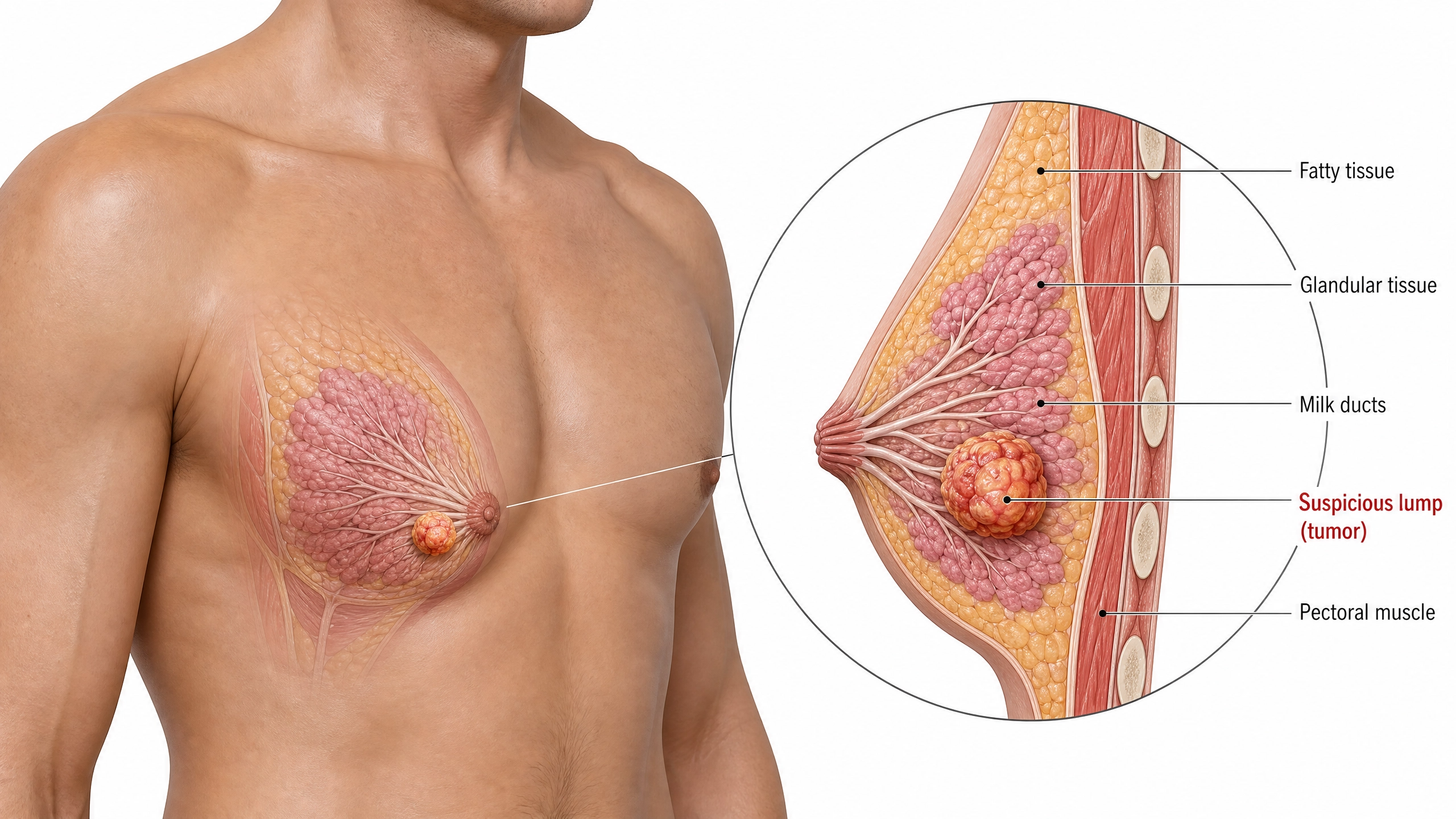
Even though men have smaller amounts of breast tissue, cancer can still develop within these cells. Male breast cancer usually occurs behind the nipple area because this is where most breast tissue is located.
How Common Is Breast Cancer in Men?
Male breast cancer is considered rare but not impossible.
The risk increases with age, and most cases are diagnosed in men between the ages of 60 and 70. However, younger men can also develop breast cancer, especially if they have genetic mutations or a strong family history of cancer.
At Care Speciality Hospital, Pune, Dr. Mahesh Pawar encourages men to seek medical attention if they notice any unusual changes in their breast area, regardless of age.
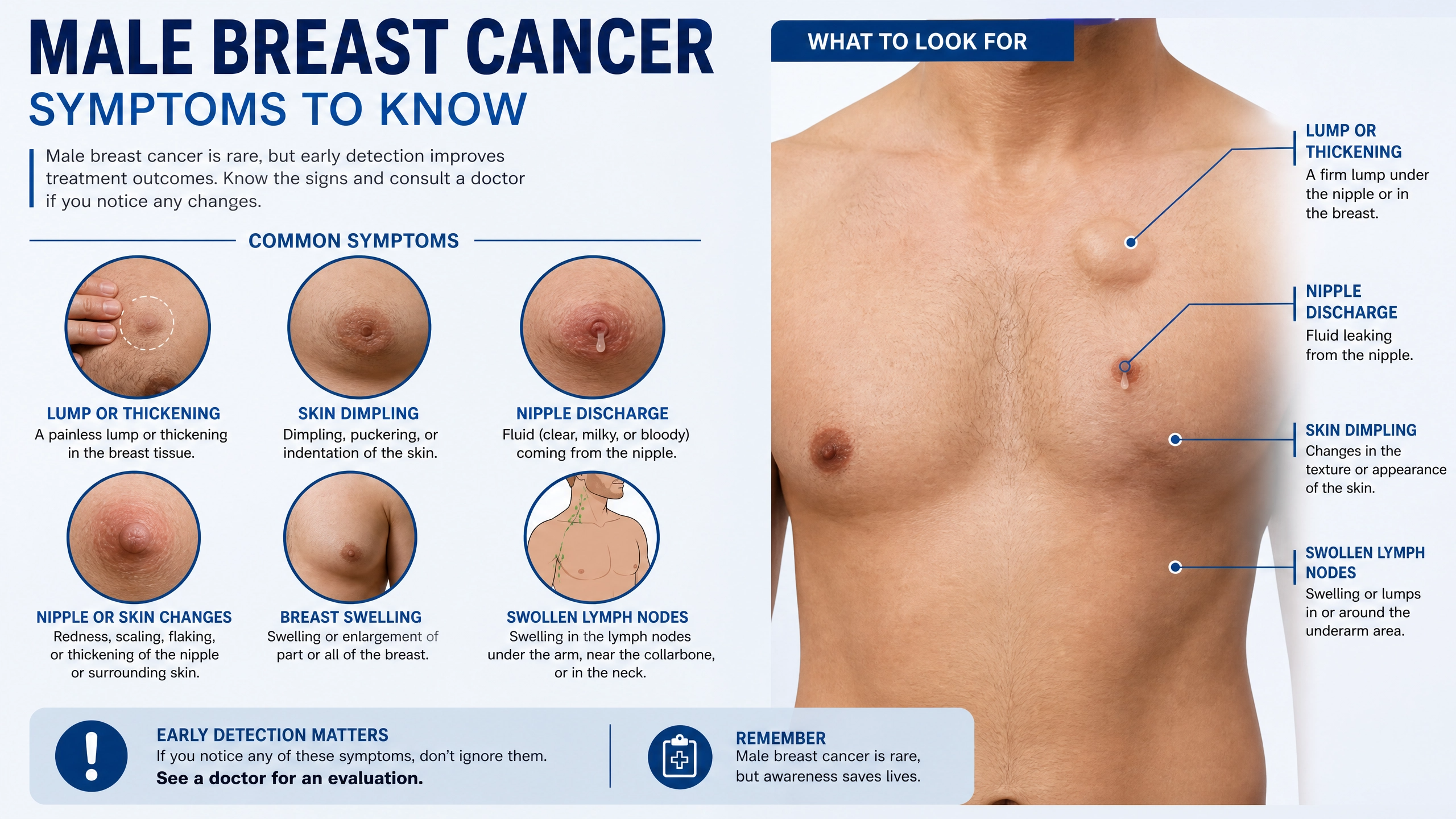
Symptoms of Breast Cancer in Men
Recognizing the symptoms early can significantly improve treatment outcomes.
Common signs and symptoms include:
-
A painless lump or thickening in the breast tissue
-
Swelling in the chest area
-
Changes in the size or shape of the breast
-
Nipple retraction (nipple turning inward)
-
Redness, scaling, or irritation around the nipple
-
Nipple discharge, including bloody discharge
-
Skin dimpling or puckering
-
Enlarged lymph nodes under the arm
Any persistent change should be evaluated by a specialist such as Dr. Mahesh Pawar at Care Speciality Hospital, Pune.
Causes and Risk Factors for Male Breast Cancer
Several factors can increase a man’s risk of developing breast cancer.
Age
The risk of breast cancer increases as men grow older. Most cases are diagnosed after the age of 60.
Family History
Men with close relatives who have had breast cancer are at a higher risk. A strong family history may indicate an inherited genetic mutation.
Genetic Mutations
Inherited mutations in the BRCA genes, especially BRCA2, significantly increase the risk of male breast cancer.
Hormonal Imbalances
Higher levels of estrogen can contribute to breast cancer development in men. Conditions associated with increased estrogen include:
-
Obesity
-
Liver disease
-
Hormone therapy
-
Certain genetic disorders
Klinefelter Syndrome
This rare genetic condition causes men to produce less testosterone and more estrogen, increasing breast cancer risk.
Radiation Exposure
Previous radiation treatment to the chest area may elevate the risk of developing breast cancer later in life.
Obesity
Excess body fat increases estrogen production, making obesity an important risk factor.
At Care Speciality Hospital, Pune, Dr. Mahesh Pawar often advises maintaining a healthy lifestyle to reduce cancer risks.

Is Male Breast Cancer Hereditary?
In some cases, yes.
Men who carry BRCA1 or BRCA2 gene mutations have a higher chance of developing breast cancer. Genetic counseling and testing may be recommended for individuals with a strong family history of breast, ovarian, or prostate cancer.
Dr. Mahesh Pawar recommends discussing family history during routine health evaluations at Care Speciality Hospital, Pune to assess potential hereditary cancer risks.
How Is Male Breast Cancer Diagnosed?
Early diagnosis plays a crucial role in successful treatment.
Clinical Breast Examination
The doctor examines the breast tissue, nipple, and nearby lymph nodes for abnormalities.
Imaging Tests
Diagnostic imaging may include:
-
Mammography
-
Breast ultrasound
-
MRI scans in selected cases
Biopsy
A biopsy is the most definitive method for diagnosing breast cancer. A small tissue sample is collected and examined under a microscope.
At Care Speciality Hospital, Pune, Dr. Mahesh Pawar utilizes advanced diagnostic techniques to accurately diagnose breast cancer and determine the best treatment strategy.
Types of Breast Cancer Found in Men
Several types of breast cancer can affect men.
Invasive Ductal Carcinoma (IDC)
This is the most common type of male breast cancer. It begins in the milk ducts and spreads into surrounding tissue.
Ductal Carcinoma In Situ (DCIS)
A non-invasive form of breast cancer confined to the ducts.
Inflammatory Breast Cancer
A rare and aggressive type that causes redness and swelling.
Paget’s Disease of the Nipple
A rare cancer affecting the skin of the nipple and surrounding area.
Stages of Male Breast Cancer
Male breast cancer is classified into stages based on tumor size and spread.
Stage 0
Cancer remains confined to the ducts.
Stage 1
The tumor is small and localized.
Stage 2
Cancer may have spread to nearby lymph nodes.
Stage 3
More extensive involvement of surrounding tissues or lymph nodes.
Stage 4
Cancer has spread to distant organs such as the liver, lungs, or bones.
Early diagnosis at Care Speciality Hospital, Pune can significantly improve outcomes and treatment success rates.
Treatment Options for Male Breast Cancer
Treatment depends on the cancer stage, tumor characteristics, and overall patient health.
Surgery
Surgery is often the primary treatment.
Procedures may include:
-
Mastectomy (removal of breast tissue)
-
Lymph node removal when necessary
Radiation Therapy
Radiation therapy helps destroy remaining cancer cells after surgery.
Chemotherapy
Chemotherapy may be recommended if cancer has spread or carries a higher risk of recurrence.
Hormone Therapy
Many male breast cancers are hormone receptor-positive, making hormone-blocking medications highly effective.
Targeted Therapy
Certain cancers may benefit from targeted treatments based on specific molecular characteristics.
Dr. Mahesh Pawar at Care Speciality Hospital, Pune develops personalized treatment plans based on each patient’s unique condition and cancer stage.

Can Male Breast Cancer Be Prevented?
While prevention is not always possible, certain lifestyle measures may help reduce risk.
-
Maintain a healthy body weight
-
Exercise regularly
-
Limit alcohol consumption
-
Avoid tobacco products
-
Manage chronic health conditions
-
Discuss genetic testing if there is a family history of cancer
-
Attend regular health checkups
Importance of Early Detection
Many men delay seeking medical attention because they are unaware that breast cancer can occur in males. This delay often results in diagnosis at more advanced stages.
Early detection offers several advantages:
-
Better treatment outcomes
-
Less extensive treatment
-
Higher survival rates
-
Improved quality of life
Dr. Mahesh Pawar strongly encourages men in Pune and nearby areas to seek immediate medical evaluation for any unusual breast symptoms.
When Should You Consult a Specialist?
You should schedule a consultation if you experience:
-
A breast lump
-
Nipple discharge
-
Skin changes on the chest
-
Persistent breast pain
-
Swelling under the arm
-
Changes in nipple appearance
Prompt evaluation at Care Speciality Hospital, Pune can help identify the cause and ensure timely treatment if necessary.
Why Choose Care Speciality Hospital, Pune for Breast Cancer Care?
Patients seeking comprehensive breast cancer diagnosis and treatment can benefit from the expertise available at Care Speciality Hospital, Pune.
Key advantages include:
-
Experienced cancer specialists
-
Advanced diagnostic facilities
-
Personalized treatment planning
-
Multidisciplinary cancer care
-
Comprehensive patient support
-
Modern treatment technologies
Under the guidance of Dr. Mahesh Pawar, patients receive evidence-based cancer care focused on achieving the best possible outcomes.
Conclusion
Although breast cancer in men is rare, it is a real and potentially serious disease. Awareness, early detection, and timely medical intervention can significantly improve treatment success and survival rates. Men should never ignore unusual breast changes, lumps, or nipple abnormalities.
If you or a loved one notice any signs of breast cancer, consult Dr. Mahesh Pawar at Care Speciality Hospital, Pune for expert evaluation, diagnosis, and personalized treatment. Early action can make a life-changing difference in the fight against breast cancer.